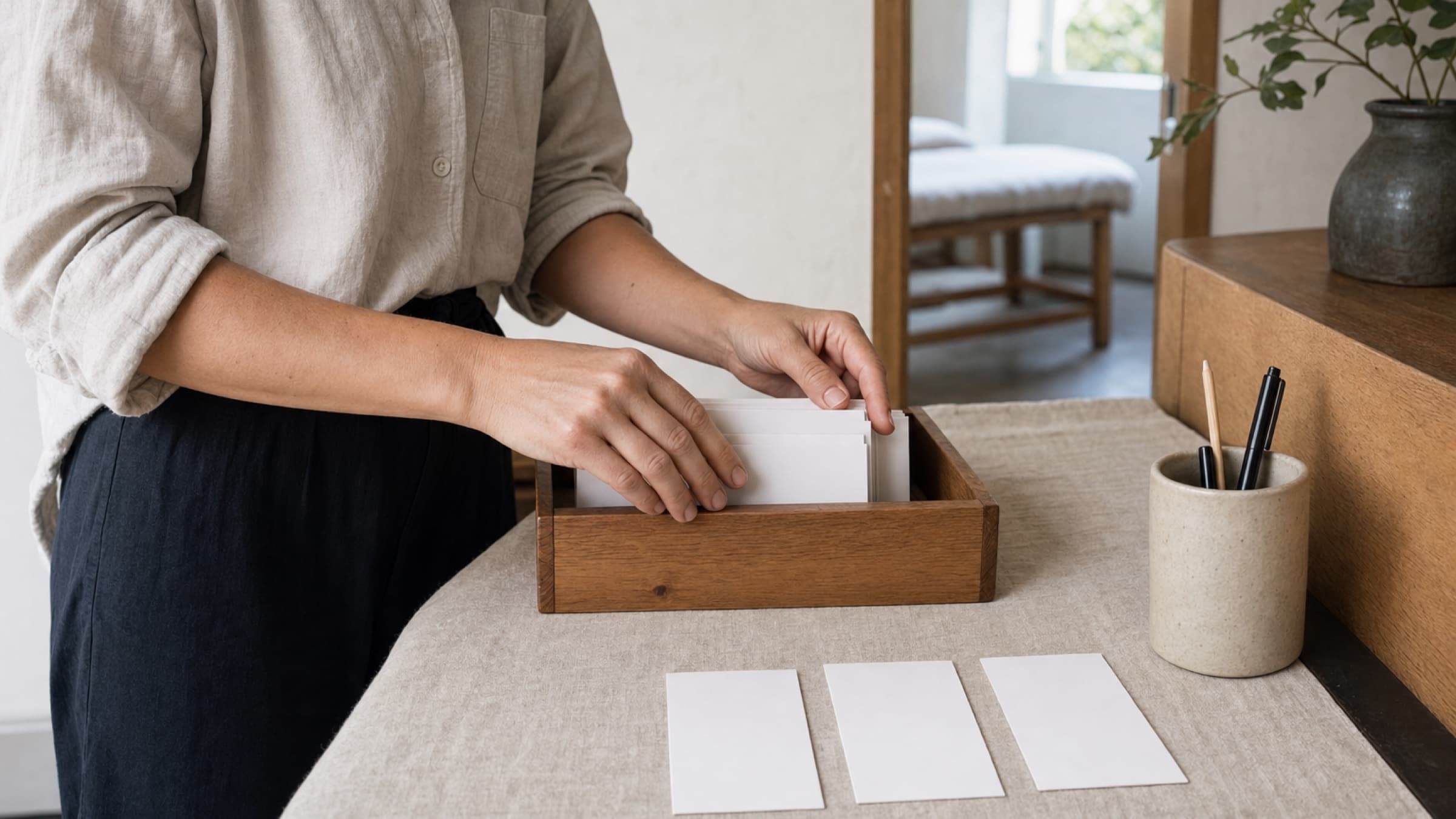

The rebook happens or it doesn't
There is a narrow window between the end of the session and the door. If the next appointment gets scheduled inside that window, most of the work is done. If it doesn't, the client leaves with a good intention that has to survive the rest of their day.
Good intentions rarely do. Not because your client is disorganized, but because life waits for them the second they step outside. A parent picks up a phone. A worker opens their laptop. A patient with pain thinks, "I feel better right now, I will call when I need it again," and then does not call until they need it very much.
The habit worth building is not "ask every client to rebook." It is "make the ask normal, easy, and always available, so you do not have to decide each time whether it is appropriate." The decision-making is what wears you out.
Ask before you take payment
Payment is the natural stopping point in most sessions. Clients treat it as the closing act. If you wait until after the card is charged and the receipt is emailed, you are asking them to reopen a completed transaction.
Move the rebook one step earlier. When you are wrapping up notes and heading toward the counter, offer the next visit first. Payment then completes the whole appointment, including the one they just booked.
You do not need a script for this. One clear sentence works:
- "Do you want to grab a time before you go?"
- "Would it help to get the next one on the calendar now?"
- "Same day next week works well for what we did today. Want to hold it?"
The offer is the whole task. If they say yes, book it. If they say no, they still know that the option was there and easy.
Offer a real time, not a maybe
"You should come back in three weeks" is not a rebook. It is a homework assignment.
Give the client an actual slot to accept or decline. You have your calendar in front of you. They do not have theirs. The person with the calendar makes the first move.
A useful pattern:
- Name the interval that fits what you did today: "Two weeks would be a good check-in."
- Offer one or two concrete times: "I have Tuesday at 4:15 or Thursday at 10:30."
- Wait. Let them say yes, pick between the two, or ask for something else.
Two options is usually plenty. Three feels generous. Five feels like the same problem your booking page has. If neither of the times work, you can widen from there. Starting narrow keeps the decision small.
Match the offer to the reason they came
The right rebook rhythm is not the same for every client, and it is almost never a blanket "book them for next week."
Think about what they came in for. A treatment plan you have discussed together already implies a cadence. A one-off appointment does not. A client working through an acute problem often benefits from a closer follow-up. A maintenance client may want a longer gap on purpose.
If you have a plan of care in mind, name it briefly and let the offer follow from it. "For the shoulder, I would want to see you weekly for the next three visits, then space it out." That gives the client a picture of what is ahead, which makes the specific offer easier to accept.
If the visit was a one-time thing, do not force a rebook. Say what the natural next step would be if anything comes back, and mean it: "You do not need to book anything unless it flares up. If it does, message me and we will find you a time."
Both versions are useful. Both are honest. Neither of them makes the client wonder whether you are trying to fill your calendar.
Give an out that keeps the door open
Not every client will say yes in the room. Some are in the middle of a scheduling change, a work project, or a season where a firm appointment feels heavy. The offer should not put them in a position where declining feels awkward.
Two small phrases do most of the work:
- "No pressure if it is easier to book from home."
- "I can hold something soft and text you tomorrow if you would rather look at your week."
A "soft hold" can be as simple as pencilling in a slot with a note to confirm within a day. If your booking system does not support that, offering to send a link to book from their couch works just as well. The point is that the client leaves with a specific next step, even if the actual booking happens later.
The out is important because it protects the ease of asking. If declining ever feels rude, both of you will start to dread the moment.
Handle "I need to check my calendar"
This is the most common non-answer, and it is usually true. Most clients honestly do need to look at their week before committing to a time.
Do not treat it as a soft no. Treat it as a specific request for a slightly different process.
You have a few good moves here:
- Send them a booking link from the treatment room while they are putting their coat on. It takes twenty seconds, and it converts the intention into a task that fits on their phone.
- Offer to hold a placeholder time for twenty-four hours: "I will keep Thursday at 10:30 for you until tomorrow at 5. Message me either way."
- Ask a narrower question: "Do mornings or afternoons work better for you this month?" Even one answer narrows what you send them later.
What you want to avoid is ending on "just book online when you can." That version of the ask depends entirely on the client remembering, sitting down, and following through. Half the time, they do. The other half, they meant to.
When not to ask
Rebooking in the room is not the right move every time. There are quiet moments to skip it.
Skip the ask when the client is emotional at the end of the session, or when the visit surfaced something hard that they need to sit with. The rebook can wait for a follow-up message the next day.
Skip it when you know you are not the right ongoing provider. If the session made it clear that a colleague, a physician, or a different specialist should be next, say that instead. Rebooking someone who needs a referral costs both of you time you cannot get back.
Skip it when your day is genuinely full and the honest next opening is three weeks away. In that case, say so plainly and offer the waitlist, a slot with an associate, or a firm date further out. The client would rather know now than discover it later.
None of these are reasons to abandon the habit. They are the reasons the habit stays trustworthy. Clients notice when the ask is thoughtful rather than automatic.
Make the moment cost you almost nothing
If the rebook takes three clicks and a search, it will not survive a busy day. If it is one click on the client's record and a visible calendar with real openings, it will happen almost every time.
Look at what you actually do at the counter right now. Count the steps. If any of them are not helping the client leave with a real next appointment, quietly remove them. The goal is a rebook that feels like handing them their coat, not like starting a new task.
Small changes help more than big ones. A saved list of typical intervals. A default reminder that goes out a few days before. A booking link you can text in one tap. A visible waitlist so a client can slot in earlier if something opens. None of these are dramatic. Together they turn the rebook into something you barely have to think about.
Stillpoint keeps the client's history, next available times, and a one-tap rebook on the same screen, so you can hold a slot and send the confirmation before they finish putting on their coat. The reminder for the next visit goes out automatically, in whatever tone your practice uses for everything else. That way the moment at the counter stays what it should be: a small, calm handoff between one good visit and the next.